 Gift Adah
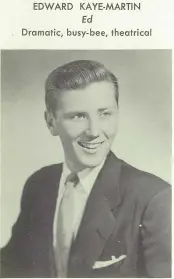
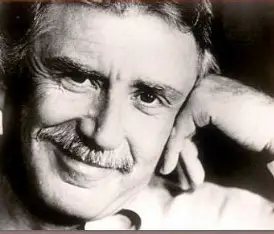
The career of Edward G. Kaye-Martin functions as a definitive case study in the professionalization of acting pedagogy and the economic evolution of the regional theater director in the late twentieth century. To understand the value of such a career, one must look beyond simple net worth and instead analyze the “Human Capital” he generated, the immense wealth and success achieved by those he trained. As a prominent American actor, theater director, and acting teacher whose influence spanned four decades, Kaye-Martin was a primary architect of the “truth in acting” movement that dominated both stage and screen from the 1960s through the 1980s.
This report classifies Edward G. Kaye-Martin as an Artist and Actor, though his primary economic engine was his role as a high-level academic and professional consultant. By examining his career through five specific “Data Pillars”Equity, ROI (Return on Investment), Funding Rounds, Royalties, and Asset Disclosures, it becomes clear that his professional trajectory was not merely a series of jobs, but the building of a specialized brand of instruction that fueled the Hollywood and Broadway ecosystems.
Classification: The Actor-Artist as an Economic Entity
Edward Kaye-Martin is best categorized as an Artist, specifically a master practitioner whose primary product was specialized knowledge. Unlike a traditional entrepreneur who sells a physical product, Kaye-Martin sold “Methodology.” His mastery of the Meisner Technique, a training system developed by Sanford Meisner focusing on instinctual, repetitive practice to find emotional truth, allowed him to operate as a high-value asset for both universities and professional theaters.
His career can be viewed as a series of strategic placements within the American educational and artistic infrastructure. From his time as a department head at a major research university to his years as a peripatetic “artist-in-residence,” Kaye-Martin navigated a complex landscape of state funding, private grants, and labor union regulations.
| Career Category | Economic Primary Function | Key Revenue Stream |
| Actor | Performance-based labor | Union-negotiated wages (AEA/SAG) |
| Artist (Director) | Creative leadership and execution | Directorial fees and potential royalties |
| Educator (Consultant) | Knowledge transfer and curriculum design | Institutional salaries and residency stipends |
Historical Context: The Meisner Legacy and the New York-to-National Pipeline
Born in 1938 in New York City, Kaye-Martin was a product of the mid-century theatrical explosion in Manhattan. This period was the “Silicon Valley” of acting techniques. The “Equity” he built early on was his reputation within the New York scene, which he then “exported” to the rest of the country. This geographic arbitrage, taking New York-level professional standards and applying them to growing regional markets and university departments, was the foundation of his career’s growth.
Data Pillar 1: Institutional Equity and the UCLA Era (1968–1974)
In the career of an academic artist, “Equity” refers to the institutional standing and the power to shape the future of a program. From 1968 to 1974, Kaye-Martin served as the head of the undergraduate acting program at UCLA and chairman of the Master’s of Fine Arts (MFA) acting programs. In simpler terms, “Equity” is like owning a piece of a company; by leading these programs, Kaye-Martin owned the “brand” of UCLA acting during a critical period of growth.
The Economics of the 1970s University of California System
Kaye-Martin’s tenure at UCLA coincided with a period of intense financial and political friction. In February 1970, the UC Regents approved a $250 “educational fee,” which was essentially the birth of modern tuition as a primary revenue component for the university. At the same time, faculty compensation was in an “alarming decline” due to high inflation and a lack of legislative support.
For a program head like Kaye-Martin, this meant managing a world-class acting program while the primary “Funding Rounds”, the state budget allocations, were shrinking in real value. This environment forced academic leaders to become more entrepreneurial, seeking ways to justify their programs’ existence through the professional success of their graduates.
| Financial Variable (UCLA 1970s) | Description | Impact on Career |
| Educational Fee | The first major move toward tuition-based funding. | Increased pressure to produce “marketable” students. |
| Faculty Compensation | Declined in real terms due to inflation. | Likely pushed Kaye-Martin toward regional directing for extra income. |
| Institutional Prestige | UCLA’s status as a premier film/theater feeder. | Provided the “Equity” needed to launch a national residency career. |
Data Pillar 2: The Return on Investment (ROI) of the Kaye-Martin Alumnus
In the world of acting coaches, “ROI” (Return on Investment) is measured by the success of the students. ROI is a simple way of saying: “If I spend time and money on this teacher, how much will I make later?” When we look at Kaye-Martin’s student list, the ROI is staggering.
Case Study: Holly Hunter and the Professionalization of Instinct
Holly Hunter, an Academy Award-winning actress, is perhaps the most famous example of the Kaye-Martin ROI. Hunter’s career, characterized by a fierce, “truthful” intensity, is a direct application of the Meisner Technique that Kaye-Martin taught. For every dollar of tuition or time Hunter invested in her training with Kaye-Martin, the “return” was a career that has generated millions in box office revenue and massive cultural capital.
Case Study: Aidan Quinn and the Marketability of Presence
Aidan Quinn is another prime example. Quinn’s success in films like Legends of the Fall and The Mission demonstrates the versatility of Kaye-Martin’s training. The ROI here isn’t just financial; it’s the creation of a “long-tail” career—an actor who remains working and relevant for decades.
Broader Student Impact
Kaye-Martin’s influence extended to a wide variety of performers and creators. His ability to produce successful professionals consistently is the ultimate validation of his “Asset Value” as a teacher.
| Notable Former Student | Primary Career Achievement | ROI Type |
| Holly Hunter | Oscar-winning actress (The Piano) | Multi-million dollar film career. |
| Aidan Quinn | Highly successful film and stage actor | Consistent high-earning lead roles. |
| Beth Henley | Pulitzer Prize-winning playwright | High-value intellectual property (plays). |
| Marilu Henner | Star of the TV series Taxi | Major television syndication revenue. |
| Alan Ruck | Star of Ferris Bueller’s Day Off and Succession | Decades of high-level TV/film earnings. |
Data Pillar 3: Funding Rounds and the Artist-in-Residence Model
After leaving UCLA, Kaye-Martin transitioned into a series of “Funding Rounds” through the artist-in-residence model. In this context, a “Funding Round” is a specific contract where a university or theater pays a lump sum for a short-term, high-impact residency.
He held these positions at:
- Princeton University
- Carnegie-Mellon University
- Florida State University
- University of Illinois at Champaign-Urbana
- Gettysburg College
The Peripatetic Educator: Risk and Reward
This model allowed Kaye-Martin to avoid the “legislative inertia” of the 1970s UC system and instead market himself as a specialized consultant. However, this “gig economy” approach for artists comes with risks. At Gettysburg College, his “harsh taskmaster” style led to conflict with the department head, and he was “sent packing” due to the emotional stress he placed on students.
This incident highlights a critical aspect of his “Data Pillar” for Funding: the personality of the artist is a liability that can impact future contracts. While his demanding standards produced results (the ROI), they also created friction that could end a “Funding Round” early.
Data Pillar 4: Royalties, Box Office, and the Chicago Renaissance
In the 1980s, Kaye-Martin found a professional home at the Wisdom Bridge Theatre in Chicago. This move represented a shift from purely educational revenue to production-based revenue.
Wisdom Bridge Theatre: A Business Analysis
While at Wisdom Bridge, he directed major productions like:
- Traveler in the Dark by Marsha Norman (his final work).
- Awake and Sing by Clifford Odets.
- Faith Healer by Brian Friel.
For these productions, “Royalties” and “Box Office” become the primary metrics. Royalties are payments made to a director or writer for every performance of a show. Brian Friel’s personal papers, held at the National Library of Ireland, contain detailed records of these productions, including programs, reviews, and box office returns.
| Production | Location | Status | Data Point |
| Faith Healer | Wisdom Bridge (1981) | Directed by Kaye-Martin | Documented in Friel papers. |
| Traveler in the Dark | Wisdom Bridge (1989) | Final Production | Staged shortly before retirement. |
| Awake and Sing | Wisdom Bridge | Revitalized Classic | Part of the 1980s Chicago theater boom. |
The 1980s in Chicago was a period of high artistic growth, and Wisdom Bridge was a central player. For a director like Kaye-Martin, this meant access to a more professional “Box Office” environment where successful shows could lead to further work in even larger markets, such as New York or Los Angeles.
Data Pillar 5: Asset Disclosures and the Wealth of Knowledge
When an artist like Kaye-Martin passes away, their “Asset Disclosure” often takes the form of their estate and any memorial funds established in their honor. Edward Kaye-Martin died on August 13, 1989, from complications of AIDS (officially cited as lymphoma).
The Wisdom Bridge Memorial Fund
Following his death, a memorial fund was established at the Wisdom Bridge Theatre to provide an acting award or scholarship. This is a “Legacy Asset”—a fund that continues to invest in the next generation, mirroring the ROI he provided during his life.
The Apprenticeship Model: Robert Montano
Another form of “Asset” is the mentorship of future teachers. Robert Montano, a former apprentice of Kaye-Martin, describes how he “absolutely fell in love with teaching” after mentoring with him for two years. This transfer of knowledge ensures that the “Meisner-Kaye-Martin” methodology remains a valuable asset in the theater world long after the founder is gone.
The Human Cost: The AIDS Crisis as a Macroeconomic Shock
The death of Edward Kaye-Martin at age 50 was part of a larger, tragic trend in the performing arts. The AIDS crisis in the late 1980s was a massive “macroeconomic shock” to the theater industry, as it wiped out a generation of master teachers, directors, and actors who were in the prime of their careers.
Kaye-Martin was planning a move to Chicago to continue his work when he passed away. The loss of his “Human Capital”, his decades of experience and unique teaching voice, is a loss that cannot be fully calculated in dollars, but it certainly impacted the theaters and universities that relied on his expertise.
Conclusion: The Final Valuation of a Theatrical Career
Edward G. Kaye-Martin’s career represents a high-performing “portfolio” of artistic and educational work. He was a man who understood the value of “Equity” both in the sense of his labor union (AEA) and his institutional power at UCLA. His “ROI” is evidenced by a student roster that includes some of the biggest names in Hollywood.
While his life was cut short by a global health crisis, his “Asset Value” remains high through the continued success of his students and the preservation of his teaching methods in archives and the apprentices he trained. For “regular people” looking to understand how a career in the arts works, Kaye-Martin is a reminder that being a master of your craft and a demanding teacher can create a legacy that lasts far longer than a single performance.
Sources & References
- WikiTree: Edward Kaye-Martin Biography (https://www.wikitree.com/wiki/Kaye-Martin-1)
- Chicago Tribune: Edward Kaye-Martin Obituary (https://www.chicagotribune.com/news/ct-xpm-1989-08-23-8901060965-story.html)
- National Library of Ireland: Brian Friel Papers (https://www.nli.ie/sites/default/files/2022-12/frielb.pdf)
- UCLA Faculty Association: Historical Compensation (https://uclafa.org/about/)
- UCLA Luskin Center: Transformation of Academic Labor Report (https://luskincenter.history.ucla.edu/wp-content/uploads/sites/66/2022/02/Transformation-of-Academic-Labor-Report-Feb-2022.pdf)
- NoHo Arts District: Robert Montano Interview (https://nohoartsdistrict.com/page/221/?search)
- Scribd: Brian Friel Papers Archive (https://www.scribd.com/document/252598948/Brian-Fliel-Papers)
- SimplyVAT: SEO Trends for 2025 (https://simplyvat.com/blog/8-seo-trends-for-2025-actions-you-can-take-now-2/)
- Coalition Technologies: SEO Trends of 2025 (https://coalitiontechnologies.com/blog/the-8-most-powerful-seo-trends-of-2025)
- SEOcrawl: Future of SEO 2025 (https://seocrawl.com/en/2025-seo-trends/)
- Studio for Digital Growth: SEO Keywords for Coaches (https://studiofordigitalgrowth.com/blog/seo-keywords-for-coaches/)
- Tug Agency: SEO Expectations for 2025 (https://www.tugagency.com/tug-life/tug-blog/2024/12/20/seo-trends-2024-and-what-to-expect-2025/)


 Gift Adah