 Gift Adah
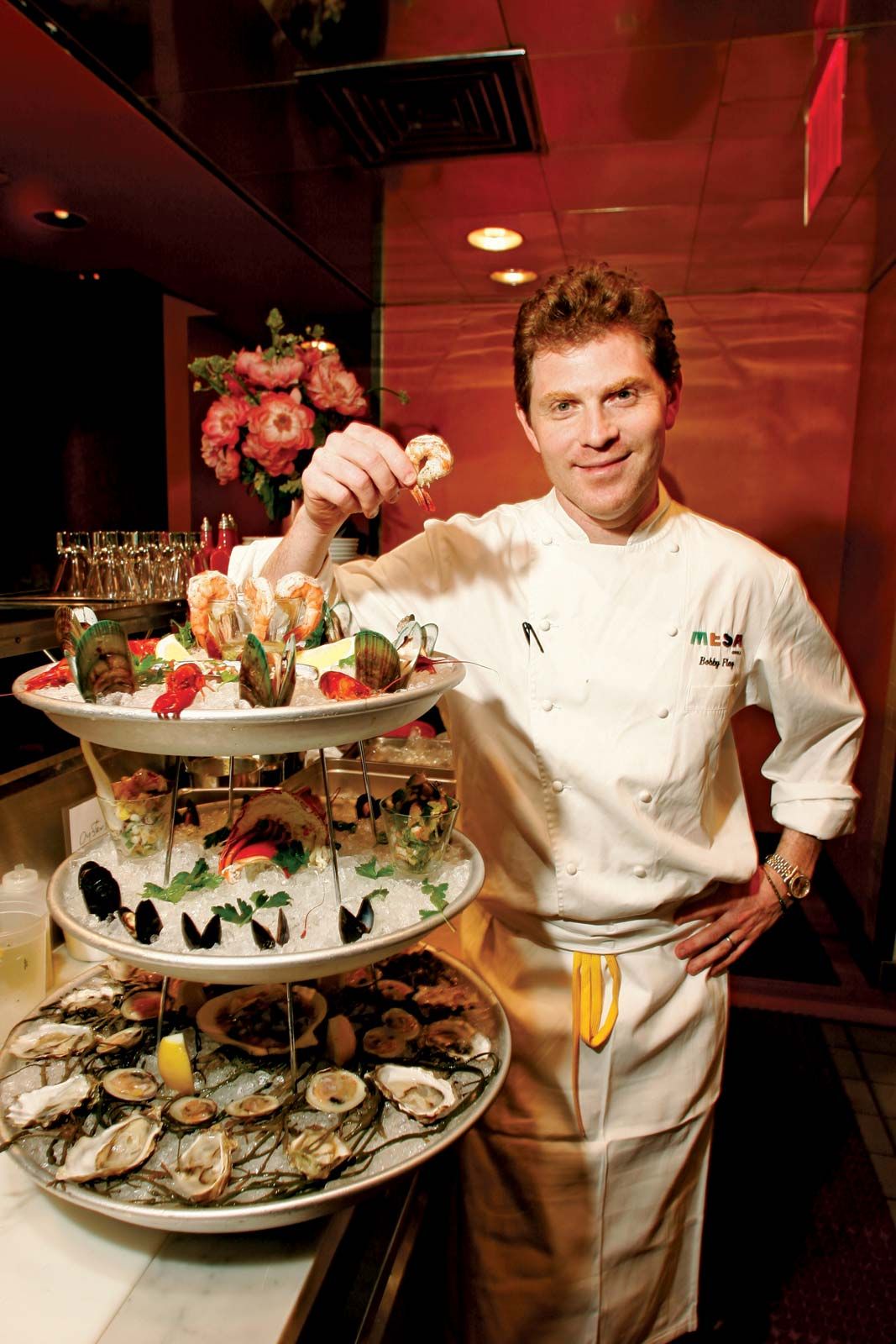
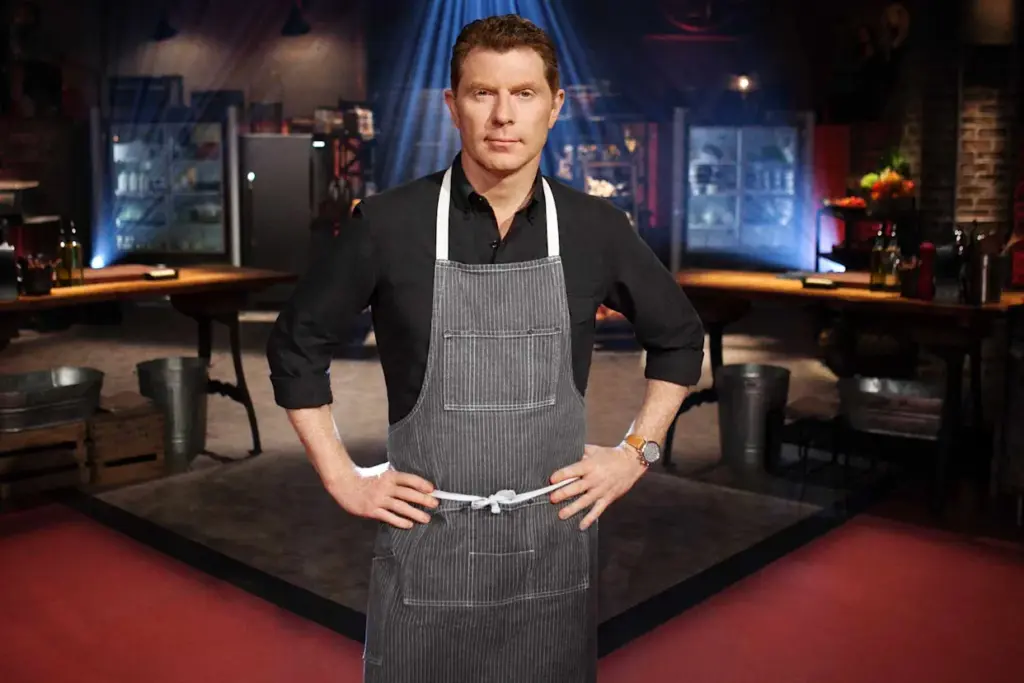
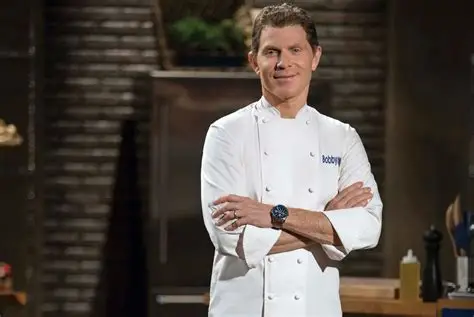
Bobby Flay is the guy you see on your TV screen almost every night, wearing a clean apron and challenging someone to a high-stakes cook-off. But if you look past the grill and the signature Southwestern spices, you will find one of the most brilliant business minds in the world of food. Most people think of him as just a chef. However, in the world of wealth and career analysis, we categorize Bobby Flay as an Entrepreneur. He does not just cook food; he builds systems that make money while he sleeps.
As of early 2026, experts estimate that Bobby Flay’s net worth is sitting comfortably at $60 million. That is a massive number, especially for a guy who started out as a high school dropout. His career is interesting because it follows a “climb the ladder” story that turned into a “build the ladder” empire. He moved from being a guy who got a paycheck to a guy who owns the production company that signs the paychecks. This report is going to look deep into how he did it, where the money comes from, and what we can learn from his “Data Pillars” like Equity and ROI.
The Entrepreneurial Journey: From the GED to the Walk of Fame
Every great fortune has a starting point. For Bobby, it was not a fancy business school. It was a pizza parlor and a Baskin-Robbins. Bobby Flay was born in New York City in 1964 and grew up on the Upper East Side. He was never much for the classroom. At 17, he dropped out of high school. At that point, most people would have said his career prospects were pretty low. But Bobby had something called “Sweat Equity.”
Sweat Equity is a simple term that means the value you add to a business through your own hard work and long hours, rather than by putting in cash. Bobby put in the hours at a restaurant called Joe Allen. His father was a partner there, and Bobby started out filling in for a sick employee. He moved from making salads to becoming a kitchen helper. Joe Allen himself was so impressed by Bobby’s natural talent that he paid for Bobby to go to the French Culinary Institute (FCI).
This was the first major turning point in his career. In 1984, he was part of the very first graduating class at the FCI. This gave him the technical foundation he needed to turn his passion into a professional career. He did not just want to be a good cook; he wanted to be the best. He worked under famous chefs like Jonathan Waxman, where he learned about the “sweet-heat” of Southwestern ingredients. This became his “niche.” A niche is just a specialized corner of the market where you can be the top expert. By picking Southwestern food, Bobby made sure he was not just another guy cooking French food in New York.
By 1991, he opened Mesa Grill and became a partner. This is where he moved from being a chef to an entrepreneur. He was no longer just trading his time for money; he was owning a piece of the business.
The Money Breakdown: Diversifying the Flay Empire
To understand a $60 million net worth, you have to look at the different “buckets” of money Bobby has built over thirty years. As an entrepreneur, Bobby uses several key financial tools to grow his wealth. We call these “Data Pillars.”
Table 1: Bobby Flay’s Estimated Annual Revenue Streams (2025-2026)
| Revenue Stream | Estimated Annual Value | Description of Source |
| Food Network Contract | $15M – $26M | TV salary and production fees. |
| Restaurant Profits | $5M | Profit shares from Amalfi, Gato, etc.. |
| Cookware Licensing | $4M | Royalties from GreenPan and other products. |
| Production Revenue | $3M | Income from shows produced via Rock Shrimp. |
| Book Royalties | $1M | Sales from 14+ best-selling cookbooks. |
| Horse Racing | Varies | Winnings and breeding fees. |
Data Pillar: Equity and the Power of Production
The biggest part of Bobby’s wealth comes from his relationship with the Food Network, but it is not just a simple salary. In 2021, Bobby went through a very public negotiation. He reportedly wanted a deal worth $100 million, which would have put him above other stars like Guy Fieri. While he ended up with a multi-year deal worth about $80 million, the real win was in the Equity.
Equity means you own a piece of the pie. Before 2021, Bobby was mostly a high-paid employee. After 2021, his deal was structured so that his company, Rock Shrimp Productions, would produce his shows. This changed everything. Instead of just getting paid to show up and cook, he now gets a cut of the production budget. He also owns a stake in the content itself. This is how he builds “compound wealth,” which is money that grows on top of itself over time.
His production company, Rock Shrimp Productions, has created hundreds of hours of TV. They do not just make Beat Bobby Flay; they make BBQ Brawl, Bobby’s Triple Threat, and even shows for other chefs. By 2025, Bobby signed another “robust” deal with Warner Bros. Discovery that gave him an even bigger role in developing new shows. This is the classic entrepreneur move: move from being the talent to being the owner of the platform.
Data Pillar: ROI and the Restaurant Pivot
Bobby Flay’s restaurant career is a lesson in ROI, or Return on Investment. ROI is just a fancy way of saying how much money you get back compared to what you spent to get it. In the old days, Bobby owned big, expensive restaurants like Mesa Grill and Bar Americain. These were high-prestige but had very high costs for rent and labor.
In recent years, Bobby has shifted his strategy toward higher ROI models:
- The Partnership Model: For fine dining, like his restaurant Amalfi in Las Vegas, he partners with big hotels like Caesars Palace. The hotel often puts up the money for the building, and Bobby provides the brand and the menu. This lowers his risk and raises his ROI.
- The Franchise Model: Bobby is currently expanding “Bobby’s Burgers”. This is a fast-casual brand. A franchise is a business where someone else pays you for the right to open a store using your name and your recipes.
Table 2: Comparing Restaurant Business Models
| Feature | Fine Dining (e.g., Gato) | Fast-Casual (Bobby’s Burgers) |
| Risk for Bobby | High | Low. |
| Scalability | Low (Hard to copy) | High (Easy to copy). |
| Primary Income | Guest checks | Franchise fees & Royalties. |
| Growth Strategy | One by one | National expansion. |
Bobby’s Burgers is now the growth engine of his restaurant portfolio. By shrinking the size of the kitchen to just 400 square feet in some locations, he has made the business much more profitable. He is focusing on airports and stadiums where people need a quick, reliable meal. This is a pure entrepreneur move: finding a way to sell more of a product with less work.
Funding Rounds and “Made by Nacho”
One of Bobby’s most interesting ventures is a cat food company called “Made by Nacho”. This is where we see him using Funding Rounds. A funding round is when a new company raises money from investors to help it grow.
Bobby founded “Made by Nacho” in 2020 because he noticed that most fancy pet food was for dogs, while cat owners were left with the same old stuff. He teamed up with food industry expert Elly Truesdell and raised $14 million in a “Series A” funding round. Series A is just the first major round of investment from professional venture capital firms.
By early 2022, the company had raised a total of $24 million. They used this money to get onto the shelves of 1,300 PetSmart stores. The business has seen “extraordinary scaling,” with revenue growing 198 times from where it started. This is not just a side project; it is a serious attempt to build a “lifestyle brand” for cats. For Bobby, this provides a completely different kind of wealth that is not tied to him being on TV. It is a product that people buy every day, which creates steady, predictable cash flow.
Royalties and Mailbox Money
Bobby Flay has a lot of “Mailbox Money,” which we professionally call Royalties. Royalties are payments you get for allowing a company to use your name, your books, or your inventions.
- Cookware: Bobby has a huge deal with GreenPan, which is sold at places like Kohl’s. Every time someone buys a blue Oxford frypan with his name on it, Bobby gets a cut. He does not have to be in the store selling it; the money just shows up. Experts estimate his cookware and grilling lines bring in $4 million a year.
- Cookbooks: Bobby has written at least 14 books. These books stay on store shelves for years. Even a book he wrote ten years ago is still making him money today. This is a great example of an asset that keeps paying you long after you finished the work.
Asset Disclosures and the Horse Racing Passion
Bobby Flay is also a major player in the world of horse racing. This is more than a hobby; he treats it like a boutique business. He currently owns a stable of high-quality horses and serves on the board of the New York Racing Association.
In the racing world, you make money through winnings and through “Breeding Rights.” If you own a horse that wins a big race like the Belmont Stakes (which Bobby’s horse Creator did in 2016), that horse becomes very valuable for making new champion horses. In May 2025, his horse Crudo won the Sir Barton Stakes, adding another $100,000 to the tally.
He focuses on “fillies” (young female horses) because they have a high “Residual Value”. Residual Value is just what something is worth at the end of its main use. If a female horse stops racing, she can still be worth millions as a mother to new racers. This is another way Bobby manages risk in his investments.
Table 3: Bobby Flay’s Real Estate Asset Disclosures
| Property Location | Estimated Value / Status | Financial Context |
| Chelsea Duplex, NYC | Sold for $5.6M (2022) | Originally listed for $7.9M; used as a rental for a time. |
| Bird Streets, Los Angeles | Listed for $9.25M (2024) | Purchased for $7.6M in 2021; features a luxury outdoor kitchen. |
| Saratoga Springs, NY | $1.7M | Vacation home overlooking the racetrack. |
The “Bobby Flay Method” for Wealth
If we look at Bobby’s career as a map, we can see a very clear strategy. He did not get to a $60 million net worth by just being a good cook. He got there by following three rules:
- Be the Best in Your Niche: Bobby did not try to cook everything. He became the “king of the grill” and the master of Southwestern flavors.
- Own the Content: He moved from being a TV host to owning the company that makes the show. This is the difference between working for a salary and building an empire.
- Diversify Your Income: He does not rely on just one paycheck. He has money coming from TV, restaurants, cat food, cookware, books, real estate, and even horses. If one business has a bad year, the others keep him afloat.
In 2025 and 2026, Bobby continues to stay busy. He is still filming new episodes of Beat Bobby Flay and Triple Threat. He is dating fellow chef Brooke Williamson, and he even joked about making a Broadway musical based on his life. He is 60 years old now, but as an entrepreneur, he is still “building,” still “competing,” and still making sure the Bobby Flay brand is the most valuable name in the kitchen.
Sources & References
- https://sociallifemagazine.com/chronicles/bobby-flay-net-worth-2025/
- https://sociallifemagazine.com/hamptons-celebrities/bobby-flay-net-worth/
- https://www.oreateai.com/blog/bobby-flay-net-worth/f8f286a4bdb5416f350b77a649d96453
- https://parade.com/celebrities/bobby-flay-net-worth
- https://bobbyflay.com/about/
- https://cityclerk.lacity.org/onlinedocs/2015/15-0587_misc_1_05-13-2015.pdf
- https://en.wikipedia.org/wiki/Bobby_Flay
- https://www.multivu.com/players/English/58430-food-network-star-season-9/flexSwf/impAsset/document/806aa0a0-4e1a-4864-a267-55c44ad26f26.pdf
- https://dalstrong.com/blogs/international-chef-database/bobby-flay-chef-profile
- https://www.justjared.com/2024/11/11/bobby-flay-signs-new-deal-with-food-network-pay-details-revealed-new-episodes-of-tv-shows-already-in-the-works/
- https://www.reddit.com/r/foodnetwork/comments/1gous72/bobby_flay_signs_new_multiyear_deal_at_food/
- https://bobbyflay.com/
- https://www.foxbusiness.com/markets/bobby-flay-restaurant-announces-plans-to-go-public-in-mini-ipo
- https://1851franchise.com/the-inside-scoop-on-bobby-flays-new-franchise-brand-2721940
- https://observer.com/2015/10/well-done-indeed-chef-bobby-flay-lists-marital-chelsea-mercantile-pad-for-7-95-m/
- https://www.6sqft.com/unleash-your-inner-iron-chef-at-bobby-flays-8m-chelsea-duplex/
- https://www.foxnews.com/real-estate/bobby-flays-manhattan-duplex-isnt-selling-so-he-upped-the-price
- https://www.6sqft.com/bobby-flay-finds-a-renter-for-his-22500month-chelsea-duplex/
- https://www.realtor.com/news/celebrity-real-estate/bobby-flay-cuts-price-on-chelsea-home/
- https://www.americasbestracing.net/owners/bobby-flay
- https://www.americasbestracing.net/owners/winstar-farm-llc-and-flay-bobby
- https://www.winstarfarm.com/bobby-flay-acquires-minority-interest-in-g1-winner-belmont-stakes-contender-creator/
- https://www.digicom.io/case-studies/made-by-nacho-case-study
- https://www.petfoodindustry.com/pet-food-market/article/15468500/bobby-flays-made-by-nacho-starts-from-scratch
- https://www.phillipspet.com/made-by-nacho-expands-distribution-nationwide-with-phillipspet/
- https://www.alleywatch.com/2022/02/made-by-nacho-chef-approved-cat-food-bobby-flay-tessa-gould/
- https://www.prnewswire.com/news-releases/made-by-nacho-closes-series-a-raising-14m-to-support-rapid-growth-as-the-leader-in-premium-cat-crafted-cat-food-301488709.html
- https://rockshrimp.tv/
- https://en.wikipedia.org/wiki/Rock_Shrimp_Productions
- https://www.greenpan.us/pages/bobby-flay-professional-nonstick
- https://www.greenpan.us/pages/bobby-flay
- https://www.greenpan.us/products/bobby-flay-by-greenpan-chef-series-hard-anodized-10-piece-cookware-set
- https://www.greenpan.us/products/bobby-flay-by-greenpan-copper-clad-8-piece-cookware-set
- https://www.kohls.com/product/prd-7121905/bobby-flay-by-greenpan-pfas-free-nonstick-stainless-steel-8-and-10-frypan-set.jsp
- https://www.justjared.com/tags/bobby-flay/
- https://www.foodnetwork.com/shows
- https://www.vitalthrills.com/food-network-sets-return-of-bobbys-triple-threat-for-sept-2/
- https://www.reddit.com/r/foodnetwork/comments/1q6n2oa/any_idea_when_the_next_seasons_of_beat_bobby_flay/
- https://tracxn.com/d/companies/madebynacho/__fbGHF8roxZAsmJUEUJOH6xP7H3IEoS4XUpR9qnSlokw
- https://www.bloodhorse.com/horse-racing/thoroughbred/bobby-flay/2009
- https://www.thoroughbreddailynews.com/tag/bobby-flay/
- https://www.bloodhorse.com/horse-racing/articles/tag/bobby-flay
- https://www.bloodhorse.com/horse-racing/articles/286362/go-go-boots-prepares-for-u-s-debut-for-flay-clement
- https://www.thoroughbreddailynews.com/2025-mating-plans-bobby-flay-presented-by-spendthrift-farm/

 Gift Adah