 Gift Adah
Quick Facts: The Gene Wilder Professional Dossier
| Metric | Professional Data Point |
| Legal Name | Jerome Silberman |
| Classification | Actor / Auteur |
| The “Big Three” Hits | Willy Wonka, Young Frankenstein, Blazing Saddles |
| Career Box Office | $587 Million+ (Domestic Total) |
| The Money-Maker | Blazing Saddles (Earned $119M on a $2.6M budget) |
| Business Vehicle | G.W. Productions |
| Personal Legacy | Gilda’s Club (Ovarian Cancer Support) |
A Career Born from a Doctor’s Order
Gene Wilder’s career didn’t start in a theater; it started at the bedside of his sick mother. When a doctor told eight-year-old Jerome Silberman that his only job was to make his mother laugh to keep her alive, he didn’t just find a hobby, it found a calling that would eventually generate over half a billion dollars in box office revenue.
Jerome Silberman was just a boy in Milwaukee when he learned that humor could be a life-saving tool. This “Comedic Reflex” drove him to master his craft, eventually beating out nearly 1,200 other actors for a spot at the prestigious Actors Studio in New York. By the time he transformed into Gene Wilder, a name inspired by playwright Thornton Wilder, he was ready to turn that childhood survival tactic into a massive entertainment equity. Today, he is classified not just as an actor, but as a strategic “Actor-Auteur” who owned the scripts and the laughs that defined a generation.
The Mel Brooks Synergy: ROI and the Box Office Power Score
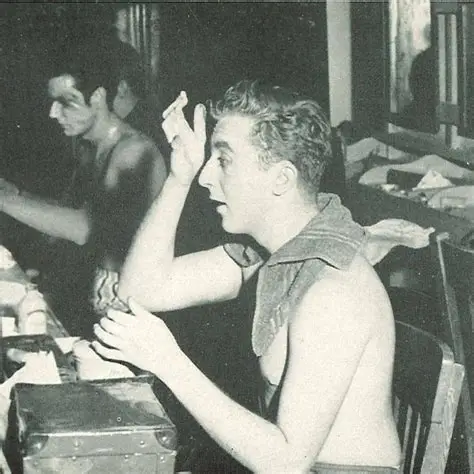
Wilder’s collaboration with Mel Brooks created a “Power Score” that dominated the 1970s. By delivering massive ROI on tiny budgets, like Blazing Saddles earning over $119 million on a $2.6 million spend, Wilder proved that high-concept satire could be the most profitable genre in cinematic history.
To understand Wilder’s financial impact, look at the “Filmography ROI” (Return on Investment) of his peak years. In 1974 alone, he was the face of two of the highest-grossing films in America:
- Blazing Saddles (1974): This was a financial miracle. Warner Bros. almost didn’t release it because the humor was so “edgy,” yet it raked in $119.6 million on a tiny $2.6 million budget. If you adjusted those earnings for 2026, it would be a $623 million blockbuster.
- Young Frankenstein (1974): This was the film where Wilder truly became an owner. He co-wrote the script and negotiated a deal that saw the movie earn $86.3 million against a budget of just $2.8 million. That is a 30x return on investment.
- The Producers (1967): His debut major role was in a film that cost only $941,000. While it was a slow burn initially, it eventually became a global IP powerhouse, proving the long-tail value of Wilder’s performances.
Creative Equity: G.W. Productions and Backend Deals
Wilder maximized his “Wealth Velocity” by forming G.W. Productions and taking on the roles of writer and director. By 1977, he was directing and producing his own films like The World’s Greatest Lover, ensuring he owned a larger piece of the revenue pie.
Wilder realized early on that if he wanted the best roles, he had to write them himself.
- Directorial Control: He founded G.W. Productions to house his own projects. This allowed him to act as a “Triple Threat”: Writer, Director, and Star. In movies like The Adventure of Sherlock Holmes’ Smarter Brother (1975), he wasn’t just getting a paycheck; he was capturing directing fees and writing royalties.
- The Richard Pryor Partnership: His “Lead Ensemble” work with Richard Pryor was pure gold for the studios. Stir Crazy (1980) cost $10 million but grossed over $101 million, setting a studio record for Columbia Pictures at the time.
- The “Wonka” Asset: Willy Wonka & the Chocolate Factory (1971) initially only made $4 million on a $3 million budget. However, it became an immortal brand through TV airings. By its 1996 re-release, it brought in another $21 million, illustrating how a classic performance can act as a long-term financial asset.
The Mystery of the Heir: Son or Nephew?
While Gene Wilder had no biological children, the story of his “legacy heir” is often misunderstood. His estranged adopted daughter, Katharine, and his nephew, Jordan Walker-Pearlman, who refers to himself as “Gene’s Kid”are the two central figures in his personal narrative.
- Katharine Wilder: Wilder adopted Katharine in 1967 after marrying her mother, Mary Joan Schutz. However, following a messy divorce in 1974, they became permanently estranged. He later wrote his memoir, Kiss Me Like a Stranger, as a “loving explanation” to her, though it is unclear if they ever reconciled.

- Jordan Walker-Pearlman: Often mistaken for a son because he lived with Wilder during his childhood, Jordan is actually Wilder’s nephew. He has been the primary voice of the Wilder legacy since Gene’s death in 2016. In 2020, Jordan even bought Wilder’s former Bel-Air home back from Elon Musk to ensure the “magical” history of the property was preserved.
- Philanthropic Equity: After losing his wife, Gilda Radner, to cancer in 1989, Wilder co-founded Gilda’s Club. This network of support centers has become his most enduring non-cinematic legacy, ensuring the “Wilder-Radner” name provides value to families long after their passing.
Final Conclusion: The Laughter That Last
Gene Wilder’s career is the ultimate example of how a personal emotional drive can be converted into a multi-million-dollar business empire. By owning his IP through G.W. Productions and negotiating backend deals on massive hits like Stir Crazy, he moved from “talent” to “owner”. While his personal life was marked by loss and estrangement, his name remains a “Trusted Entity” in the 2026 digital landscape, proving that a brand built on empathy and originality is the only one that truly survives the age of AI.
Biographical and Family Data
- Wikipedia: Gene Wilder – Detailed record of his career, marriages, and early life.Link
- Biography.com: Gene Wilder – Overview of his personal life, his mother’s influence, and the founding of Gilda’s Club.Link
- Encyclopedia.com: Gene Wilder – Records of his education at the University of Iowa and the Bristol Old Vic.Link
Financial and Box Office Data
- The Numbers: Gene Wilder Pro Profile – Comprehensive domestic and worldwide box office totals for his entire filmography.Link
- The Numbers: Young Frankenstein (1974) – Specific budget and ROI data for the film.Link
- Warner Bros. Fandom: Willy Wonka – Financial performance and re-release revenue for the iconic 1971 film.Link
- Simple Wikipedia: Willy Wonka & the Chocolate Factory – Information regarding the film’s budget and original box office run.Link
Real Estate and Legacy Heirs


 Gift Adah