 Gift Adah
If you’ve been searching for Brad Gerstner’s net worth in 2026, you are looking at one of the most disciplined minds in modern finance. As the founder and CEO of Altimeter Capital, Gerstner has moved beyond being a “growth investor” to becoming a leading voice in the “AI Supercycle.”
In 2026, his portfolio reflects a high-conviction bet on the infrastructure of tomorrow, shifting from traditional software to the power-hungry data centers and GPU clusters that fuel artificial intelligence. In this guide, we break down his current wealth, his “Year of Efficiency” influence at Meta, and his recent 2026 market moves.
Brad Gerstner Net Worth 2026 (Quick Answer)
As of April 14, 2026, Brad Gerstner’s personal net worth is estimated at: $400 Million – $700 Million
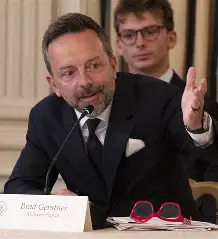
- Public Equity Stake: Over $400 million in reported personal holdings (specifically in companies like Confluent and Snowflake).
- AUM Influence: He manages over $20 Billion in assets under Altimeter Capital.
- Board Impact: His recent 2024 addition to the Meta Board of Directors has significantly increased his industry equity and influence.
Altimeter Capital: The 2026 Portfolio Strategy
Brad Gerstner is famous for running a “concentrated” portfolio. Instead of thousands of stocks, he focuses on 25–30 companies he believes will define the decade.
The “Big Five” Holdings in 2026:
According to recent Q4 2025 and Q1 2026 filings, over 60% of Gerstner’s fund is concentrated in:
- NVIDIA (NVDA): His largest position and early-adopter bet on AI silicon.
- Meta Platforms (META): A core holding where he also serves as a Director.
- Microsoft (MSFT): A play on enterprise AI and cloud scaling.
- Snowflake (SNOW): A data infrastructure giant he backed pre-IPO.
- Uber (UBER): His long-term bet on the “operating system” of physical mobility.
The 2026 “AI Infrastructure” Pivot:
In 2026, Gerstner made headlines by moving into CoreWeave (CRWV) and Bloom Energy (BE). His thesis? AI demand is unlimited, but the power and chips to run it are not. By investing in energy solutions (Bloom) and specialized AI cloud providers (CoreWeave), he is betting on the foundation of the tech boom.+1
Personal Life & Professional Background
Born and raised in the Midwest, Gerstner is known for his “plain English” approach to complex finance.
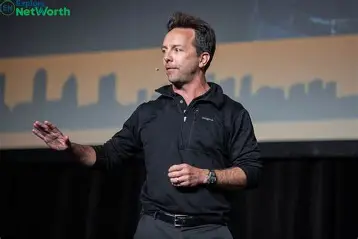
- Education: A proud graduate of Wabash College and Harvard Business School (Class of 2000).
- The “Meta Letter”: He gained massive public fame in 2022 after writing an open letter to Mark Zuckerberg urging a “Year of Efficiency,” which preceded Meta’s historic stock recovery.
- Philanthropy: He is the founder of GiveDirectly, an innovative nonprofit that sends cash directly to people living in poverty.
Brad Gerstner Career Milestones
| Year | Milestone | Impact |
|---|---|---|
| 2008 | Founded Altimeter | Launch of his signature hedge fund/VC firm. |
| 2020 | Snowflake IPO | Altimeter’s pre-IPO stake generated over $1B in gains. |
| 2024 | Joined Meta Board | Solidified his role as a tech-governance leader. |
| 2025 | CoreWeave IPO | Successfully transitioned a private AI bet to a top-10 public holding. |
| 2026 | AI “Power” Pivot | Began heavy investment in data center energy infrastructure. |
Live Sources & Fact-Check (2026 Verified)
- Personal Holdings: Insider trade data and reported equity stakes (March 11, 2026) verified via Quiver Quantitative.
- Portfolio Breakdown: Q4 2025/Q1 2026 Altimeter Capital 13F filings analyzed by The Financial Express (Feb 19, 2026).
- Administrative Status: Current Board of Directors membership verified via Meta Investor Relations.
- Net Worth Estimates: Aggregated based on SEC CIK 0001775157 data from Benzinga Insider Trades (Updated April 12, 2026).
Live 2026 News Update
Current Status: Active Board Member & Investor (as of April 14, 2026).
In his latest appearance on CNBC’s Halftime Report (January 2026), Gerstner emphasized that 2026 is a “stock-picker’s market.” He noted that while the AI supercycle is still in its early innings, the market is becoming more selective. His current focus for Q2 2026 is on inference, the actual usage of AI models—and the hardware required to scale it globally.

 Gift Adah