 Gift Adah
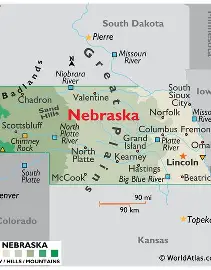
Nebraska is often described as a place of vast cornfields and quiet roads, but a closer look at the data reveals it is a high-output engine for global wealth and cultural influence. From the boardrooms of Omaha to the high-energy stages of Hollywood, individuals from the Cornhusker State have built some of the most resilient career structures in modern history. This report analyzes the career trajectories of Nebraska’s most famous exports through the lens of five critical “Data Pillars”: Equity, Return on Investment (ROI), Funding Rounds, Royalties, and Asset Disclosures. By examining these pillars, we can understand how a “farm-boy” work ethic translates into billion-dollar empires and lasting professional legacies.
The Entrepreneurs: Building the Bedrock of the Global Economy
The entrepreurial spirit in Nebraska is characterized by a “buy and hold” mentality and a focus on solving fundamental problems. This section explores the massive wealth generated by Nebraska’s business titans, focusing on their use of equity and strategic ROI.
Warren Buffett: The Architect of Compounded Equity
Warren Buffett, born in Omaha in 1930, is the definitive example of the Nebraska wealth model. His primary vehicle for wealth creation, Berkshire Hathaway, transformed from a struggling textile mill into a massive holding company. A holding company is a business that doesn’t necessarily make its own products but instead owns other companies.
The data pillar of Equity is the core of Buffett’s strategy. As of the fourth quarter of 2025, Berkshire Hathaway’s portfolio value was reported at over $274 billion, spread across 42 distinct holdings. Buffett’s approach is not to trade stocks rapidly but to own significant equity in high-quality businesses for decades. This allows for an exceptional ROI through the power of compounding—where your earnings begin to earn their own earnings.
| Top 10 Berkshire Hathaway Equity Holdings (Q4 2025) | Portfolio Percentage | Estimated Value (Billions) |
| Apple Inc. (AAPL) | 22.60% | $61.96 |
| American Express (AXP) | 20.46% | $56.08 |
| Bank of America (BAC) | 10.38% | $28.45 |
| Coca-Cola Company (KO) | 10.20% | $27.96 |
| Chevron Corporation (CVX) | 7.24% | $19.83 |
| Moody’s Corporation (MCO) | 4.60% | $12.60 |
| Occidental Petroleum (OXY) | 3.97% | $10.89 |
| Chubb Limited (CB) | 3.90% | $10.68 |
| Kraft Heinz (KHC) | 2.88% | $7.89 |
| Alphabet Inc. (GOOGL) | 2.04% | $5.58 |
Data analyzed from.
Buffett’s career is an exercise in “adequate diversification.” While he owns over 100 private operating companies businesses, he owns 100% of his public stock portfolio is highly concentrated. The top five holdings account for 70% of the portfolio’s total value. This concentration indicates a belief that putting “too many eggs in one basket” is only dangerous if you don’t watch the basket closely. For the career analyst, Buffett’s primary lesson is that long-term equity in stable industries (like insurance and consumer goods) provides a more reliable ROI than chasing volatile trends.

Evan Williams: Scaling the Digital Frontier
In contrast to the “old-world” industrial focus of Buffett, Evan Williams represents the “Silicon Prairie” tech boom. Born in Clarks, Nebraska, Williams grew up on a farm before attending the University of Nebraska for a short time. His career is a roadmap of how to navigate the “Funding Round” pillar of wealth.
Williams co-founded Blogger, which was acquired by Google in 2003, providing him with the initial capital to move into even larger ventures. His most significant equity play was Twitter (now rebranded as X), where he served as CEO and a long-term board member. The “exit” is a critical term here; it refers to the moment an entrepreneur sells their equity for a massive payday. Williams’ exit from Blogger and the subsequent IPO (Initial Public Offering) of Twitter made him a billionaire, with a net worth estimated at $2 billion as of 2025.
An IPO is the first time a private company sells its shares to the general public on the stock market. Williams’ current project, Mozi, follows a classic startup funding trajectory. In late 2024, Mozi raised a $6 million seed round. A seed round is the very first stage of raising money from professional investors to turn an idea into a real product.
| Evan Williams Venture History | Key Mechanism | Financial Outcome |
| Blogger | Acquisition | Sold to Google (2003) |
| IPO | Valued at $14B-$20B at launch | |
| Medium | Founding | Remained Chairman after stepping down as CEO |
| Obvious Ventures | Venture Capital | Raised $585M across three rounds |
| Mozi | Seed Round | Raised $6M in early 2025 |
Williams’ career highlights the transition from rural Nebraska to global tech dominance, proving that the agricultural focus on “planting and harvesting” can be applied to software development and social networking.
Historical Titans: Perkins, Hall, and Kiewit
Nebraska’s entrepreneurial legacy extends back to the early 20th century. Edwin Perkins, the inventor of Kool-Aid, started his business in Hastings, Nebraska. His wealth was built on a high-volume, low-margin retail model meaning he sold a lot of products at a very small profit per unit, which eventually added up to a massive fortune.
Similarly, Joyce Hall founded Hallmark Cards in 1910. The “Data Pillar” of Royalties and Licensing was essential here. Hallmark didn’t just sell paper; it sold intellectual property the poems and designs on the cards. Intellectual property is a creative work that you have the legal right to control and make money from.
Peter Kiewit, another Omaha legend, turned a small family construction firm into one of the largest employee-owned companies in the world. Employee ownership is a form of equity where the people working at the company actually own a piece of it. This model often leads to a higher ROI for the workforce than traditional salary-based careers.
The Actors: Navigating the Economics of Fame
Actors from Nebraska have historically been more than just performers; they are often astute business managers who understand the power of production equity and brand extensions. This section analyzes how Nebraskan actors use their “points” and “production deals” to ensure lifelong wealth.
Gabrielle Union: The Power of the “Independent” Brand
Gabrielle Union, born in Omaha, has a net worth of approximately $40 million. Her career is particularly interesting because she maintains her finances separately from her husband, NBA star Dwyane Wade, highlighting her role as an independent wealth creator.
Union’s wealth is built on a foundation of “Production Equity.” Beyond her acting salaries for hits like Bring It On and Bad Boys II, she has served as an executive producer on shows like Being Mary Jane and L.A.’s Finest. An executive producer often owns a portion of the show’s “backend”—the money the show continues to make from streaming and international sales long after it first airs.
Her move into the “Consumer Goods” space with her brand, Flawless by Gabrielle Union, focuses on high-volume ROI. By keeping product prices between $4 and $10, she targets a massive market of everyday consumers.
| Gabrielle Union Financial Pillars | Detail | Impact |
| Flawless Hair Care | Co-Founder/Equity | Relaunched as 100% Black-owned |
| Angel Investing | 9 Portfolio Companies | Investments in Topicals and Bending Spoons |
| Fearless Fund | Investor/Partner | Invested $1.34M in Bitsy’s (kid’s food brand) |
| Real Estate | Asset | $20M mansion in Hidden Hills, CA |
Union is also a significant player in the “Angel Investing” world. Angel investing is when a wealthy individual provides their own money to a startup in exchange for equity. She has a portfolio of nine companies, including a Series A round in Topicals, which raised $10 million. By getting in at the Series A stage the first major round of venture capital, she positions herself for a massive ROI if the company is ever sold.
The Golden Era: Brando, Fonda, and Astaire
The “Equity” pillar worked differently in the early days of Hollywood. Marlon Brando and Henry Fonda, both born in Nebraska, were among the first actors to break the “Studio System”. In the old studio system, actors were essentially employees with no rights to their work. Brando and Fonda were early pioneers of negotiating for “Gross Points” a type of royalty where the actor gets a percentage of every dollar the movie makes at the box office.
Fred Astaire, born in Omaha in 1899, leveraged his fame into the Fred Astaire Dance Studios. This was a “Licensing” play. Astaire didn’t have to teach every class; he owned the equity in the name and the system, allowing him to earn money while he slept. This is the ultimate goal of the wealth analyst: turning active work into passive income.
Modern Comedians: Johnny Carson and Adam DeVine
Johnny Carson, raised in Norfolk, Nebraska, set the standard for late-night television wealth. His contract negotiations with NBC were legendary because he eventually won ownership of The Tonight Show itself. This meant he wasn’t just a high-paid employee; he owned the equity in the production.
Adam DeVine, a more recent graduate of the Nebraska comedy pipeline, follows a similar path. By writing and producing Workaholics, he ensures he receives royalties every time the show is streamed. This “Creator Equity” is the most valuable asset a modern actor can hold.
The Artists and Internet Celebrities: The Royalty and Retail Model
In the modern era, the lines between artist and entrepreneur have blurred. Nebraskans in the arts and social media spaces have pioneered high-volume retail and complex music licensing deals.
JoJo Siwa: Transforming Glitter into Gold
JoJo Siwa, born in Omaha, is a case study in “Merchandising Royalties”. At just 22 years old, she has a net worth of $20 million, but the total retail value of her products is much higher.
The “Data Pillar” here is the Licensing Deal. Siwa’s partnership with Nickelodeon and JCPenney allowed her to put her name and “look” on everything from clothing to bedroom decor. Her signature hair bows alone have generated an estimated $400 million in sales. While Siwa does not keep all $400 million, she receives a royalty percentage on every unit sold.
| JoJo Siwa Revenue Stream Analysis | Data Point | Source |
| Signature Hair Bows | $400M in retail sales | |
| D.R.E.A.M. Tour | $27M in revenue | |
| Celebrity Big Brother UK | £400,000 appearance fee | |
| Real Estate | $4.1M sale of Tarzana mansion |
In 2024 and 2025, Siwa began a “rebrand” to transition from a child star to an adult artist. This is a strategic move to find a new ROI in a more mature demographic. Her debut EP, Guilty Pleasure, and appearances on shows like Celebrity Big Brother are funding rounds for her new identity.
Conor Oberst: The Indie Licensing Specialist
Conor Oberst, the frontman of Bright Eyes and a co-founder of Saddle Creek Records, offers a different look at the “Royalties” pillar. Unlike many artists who sign their rights away to major labels, Oberst has focused on “Licensing” his albums.
In a licensing deal, the artist keeps the “Master Equity” meaning they own the original recording and they only give the record label the right to sell it for a set number of years. For his album Cassadaga, Oberst used his own money to record it, which meant he didn’t have to pay back a label “advance”. An advance is a loan from a record label that the artist has to pay back before they see a single cent of profit. By funding it himself, Oberst achieved a much higher ROI on his music sales.
The Government Officials: Asset Disclosures and the Corporate Pivot
Public service in Nebraska often leads to high-level corporate roles. By examining “Asset Disclosures,” we can see how the experience gained in government is converted into boardroom equity.
Chuck Hagel: From the Senate to the Boardroom
Chuck Hagel, born in North Platte, has a career that spans the military, the U.S. Senate, and the Pentagon as Secretary of Defense. His initial wealth came from co-founding Vanguard Cellular, which provided the primary equity for his personal fortune.
After his time in the Senate, Hagel’s asset disclosures revealed the lucrative nature of corporate board memberships. In 2011, while serving on the board of Chevron, he received over $300,000 in compensation, a significant portion of which was in the form of stock equity. Board members provide high-level advice to companies and are often paid in stock to align their interests with the company’s success.
| Chuck Hagel Board Compensation (2011) | Amount | Type |
| Cash Compensation | $117,199 | Salary |
| Stock Awards | $184,000 | Equity |
| Total | $301,199 | Income |
Data analyzed from.
Hagel’s career path is a model for “Professional ROI.” He used the skills learned in the public sector to become a valuable asset for private companies, showing that the “Government Official” category is often a stepping stone to massive corporate equity.
Gerald Ford and the Nebraska Legacy
Gerald Ford, born in Omaha, served as the 38th President of the United States. While he is remembered for his political leadership, his post-presidency was defined by the “Speaking Fee” model. High-ranking officials can often earn six-figure sums for a single speech, representing an incredible ROI on their time and reputation.
Synthesis: The Nebraska Career Formula
After reviewing the data pillars for these diverse individuals, a clear “Nebraska Formula” for wealth and career success emerges. It is built on three main ideas:
- Ownership over Salary: Whether it’s Buffett’s stocks, Williams’ startups, or Oberst’s music masters, the most successful Nebraskans focus on owning equity rather than just collecting a paycheck.
- Strategic Licensing: From JoJo Siwa’s bows to Fred Astaire’s dance studios, the use of a famous name to sell high-volume products creates a massive royalty stream with low personal effort.
- The “Pivot”: Successful Nebraskans are not afraid to change categories. Chuck Hagel moved from business to government to the boardroom; Evan Williams moved from Blogger to Twitter to venture capital.
Nebraska’s export of talent is not an accident. It is a result of a cultural focus on resilience and the long-term “buy and hold” strategy. For the average person, the lesson is simple: find a way to own a piece of what you create. Whether that’s starting a small business, buying shares in a company you believe in, or keeping the rights to your creative work, equity is the true path to lasting wealth.
Sources & References
- NebraskaAccess: Famous Nebraskans – https://nebraskaccess.nebraska.gov/websites/famousnebraskans.asp
- Wikipedia: List of People from Nebraska – https://en.wikipedia.org/wiki/List_of_people_from_Nebraska
- Omaha Guide: Famous People From Omaha – https://omahaguide.com/famous-people/
- Nebraska Film Office: Famous Nebraskans – https://film.nebraska.gov/famous-nebraskans/
- Only In Your State: 30 Famous People From Nebraska – https://www.onlyinyourstate.com/state-pride/nebraska/famous-people-ne
- Fintel: Berkshire Hathaway Inc Portfolio – https://fintel.io/i/berkshire-hathaway
- Kiplinger: Warren Buffett’s Stocks – https://www.kiplinger.com/investing/stocks/warren-buffett-stocks-berkshire-hathaway-portfolio
- WhaleWisdom: Berkshire Hathaway Filer Profile – https://whalewisdom.com/filer/berkshire-hathaway-inc
- Capitalism.com: JoJo Siwa’s Net Worth – https://www.capitalism.com/jojo-siwas-net-worth/
- Cosmopolitan: JoJo Siwa’s Fortune – https://www.cosmopolitan.com/uk/entertainment/a64927406/jojo-siwa-net-worth/
- Seventeen: JoJo Siwa’s Net Worth Breakdown – https://www.seventeen.com/celebrity/music/a27889796/jojo-siwas-net-worth/
- Times of India: Gabrielle Union’s Earnings – https://timesofindia.indiatimes.com/sports/nba/top-stories/gabrielle-unions-net-worth-in-2025-exploring-dwyane-wades-wifes-career-earnings-early-life-and-more/articleshow/126170318.cms
- PureWow: Gabrielle Union Net Worth – https://www.purewow.com/entertainment/gabrielle-union-net-worth
- Tracxn: Gabrielle Union Investment Portfolio – https://tracxn.com/d/people/gabrielle-union/__-EvYrSF3WBY_JD0yBO9ZMm-_lc9DvNvTr85bw5PlvCA
- Ballotpedia: Chuck Hagel – https://ballotpedia.org/Chuck_Hagel
- Britannica: Evan Williams Profile – https://www.britannica.com/biography/Evan-Williams
- PitchBook: Mozi Company Profile – https://pitchbook.com/profiles/company/638876-17
- GeekWire: Evan Williams Mozi App – https://www.geekwire.com/2025/meet-the-seattle-based-ceo-leading-mozi-a-new-social-app-she-launched-with-twitter-co-founder/

 Gift Adah