 Gift Adah
If you ask any Green Bay Packers fan from the early 90s who the best receiver in football was, they won’t hesitate they’ll say Sterling Sharpe. Not Jerry Rice. Not anyone else. Sterling Sharpe.
He wasn’t just great. He was dominant in a way that felt unfair. A rare physical receiver who combined brute strength with sharp route-running and explosive agility, he redefined what a “power receiver” looked like in an era still heavily dominated by the run game.
He could outmuscle cornerbacks at the line of scrimmage, outrun safeties downfield, and catch contested balls in tight coverage like it was routine. For a short stretch of NFL history, he wasn’t just one of the best, he looked like the best.
And yet, in 2026, there is still one major gap in his legacy: no gold jacket from the Pro Football Hall of Fame.
A Career That Burned Bright and Changed the Game
Sterling Sharpe was drafted in 1988 by the Green Bay Packers, and he wasted absolutely no time making an impact. From the moment he stepped on the field, it was clear he was different.
In just seven seasons, Sharpe accomplished what most players cannot achieve in a full career:
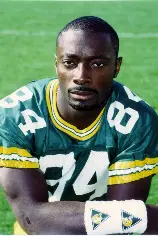
- He led the league in receptions multiple times
- He became the first NFL player ever with back-to-back 100-catch seasons
- He dominated an era where passing attacks were not yet fully modernized
By the early 1990s, he had already become the centerpiece of Green Bay’s offense and one of the most feared wide receivers in football.
Then came the arrival of Brett Favre. Together, Sharpe and Favre formed one of the most explosive quarterback–receiver duos of their time. Favre’s gunslinger mentality paired perfectly with Sharpe’s reliability and toughness. Every drive seemed to run through him. Every big moment found him.
For a brief period, it felt like the Packers were building a dynasty around his talent.
The Injury That Ended Everything Too Soon
In 1994, Sharpe reached the peak of his powers. He scored 18 touchdowns in a single season and looked unstoppable. He wasn’t just producing, he was redefining dominance.
But football can be brutal in ways no highlight reel shows.
Late in that season, Sharpe suffered a severe neck injury diagnosed as cervical spine instability. The medical warning was devastating: one more significant hit could result in permanent paralysis.
At just 29 years old, at the absolute height of his career, he was forced into retirement.
No farewell tour. No gradual decline. Just an abrupt ending while he was still playing like the best receiver in football.
That sudden exit is the core of the Hall of Fame debate today. Critics argue his career was too short. Supporters argue something far more powerful: his peak was so dominant that longevity becomes secondary.
In other words, he didn’t just play great football. He played perfect football while he was on the field.
The Legacy Argument: Peak vs Longevity
Sharpe’s case has become one of the most discussed debates in NFL history: should greatness be measured by total years, or by total dominance?
During his career, he was the definition of efficiency. Every game felt like a statement. Every season felt like a record-breaking push.
Even modern analysts revisit his numbers and point out how rare his production was for his era.
And then there’s the emotional argument: fans watched him dominate, then disappear—not because of decline, but because of injury. That alone makes his story feel unfinished, almost like a chapter ripped out of football history.
Family Legacy and Lasting Influence
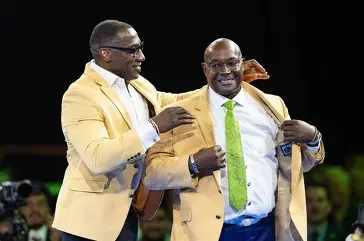
Sterling Sharpe’s football legacy is often discussed alongside his younger brother, Shannon Sharpe, who went on to become a Hall of Fame tight end and one of the most recognizable media personalities in sports.
Shannon has repeatedly said that Sterling was the better player, an opinion that keeps the debate alive every Hall of Fame cycle.
That kind of endorsement from a Hall of Famer himself adds weight to Sterling’s case that numbers alone can’t fully capture.
Why the Debate Still Matters in 2026
As of 2026, Sharpe’s name is trending again thanks to renewed Hall of Fame discussions, documentaries, and fan-led campaigns pushing for his induction. Analysts are increasingly revisiting older careers through a “peak value” lens, and Sharpe is often cited as one of the clearest examples of sustained dominance over a short span.
The argument is shifting:
- Not “how long did he play?”
- But “how good was he when he played?”
And in that conversation, Sharpe stands with the very best.
Final Word
Sterling Sharpe may never have had a long career, but he had something rarer: a flawless peak.
For seven seasons, he wasn’t just elite he was unstoppable. And even decades later, fans still argue that the Hall of Fame has not fully caught up with what they saw on the field.
Because sometimes, greatness isn’t about how long you stayed…
It’s about how high you rose while you were there.
Live Sources & Fact-Check
- Pro Football Reference: Sterling Sharpe Career Stats
- Official Hall of Fame Announcement: Packers – Sterling Sharpe Elected to HOF
- Historic Enshrinement Details: Pro Football HOF – Class of 2025
- The Case for Greatness: ESPN – Sterling Sharpe Analysis
- 2026 Museum Exhibit: Packers Hall of Fame – Sterling Sharpe Exhibit

 Gift Adah