 Gift Adah
The world of snack foods is often a battleground between flavor and fitness, but few products have captured the public imagination and the grocery carts of millions quite like the Trader Joe’s Chili & Lime-Flavored Rolled Corn Tortilla Chips. Known affectionately by fans as “Trader Joe’s Takis,” these spicy little scrolls have transcended their status as a simple snack to become a full-blown cultural phenomenon. This analysis explores the nutritional architecture of these chips to determine if they truly offer a “healthy” alternative to traditional snacks, while also dissecting the massive financial engine behind the Trader Joe’s brand. By looking at the business through the eyes of a Wealth and Career Analyst, the evidence shows that these chips are not just a snack; they are a masterclass in private-label entrepreneurship and retail efficiency.
The Entrepreneurial Spirit of a Grocery Giant
To understand why these chips are so popular, one must first look at the “Entrepreneur” behind the curtain: Trader Joe’s itself. Unlike traditional grocery stores that act as a middleman for big national brands, Trader Joe’s functions as a massive, multi-billion-dollar startup that constantly reinvents what people eat. The Chili & Lime Rolled Corn Tortilla Chips are the perfect example of this entrepreneurial strategy. They identify a “pain point” the fact that popular spicy snacks are often filled with artificial dyes and they “pivot” by creating a cleaner version that tastes just as good.
This specific product has become an “Internet Celebrity” in its own right, dominating TikTok feeds and earning a spot in the Trader Joe’s Product Hall of Fame. For the average person, the “career” of this chip is fascinating because it shows how a store-brand product can beat a national giant like Takis by focusing on what the modern customer wants: fewer chemicals and a better price.
The Nutritional Breakdown: Is It Actually Healthy?
When a regular person asks if a snack is “healthy,” they are usually comparing it to the “worst” option on the shelf. In this case, the Trader Joe’s chips are being compared to Takis Fuego. To find the answer, one must look at the building blocks of the chip: the corn, the oil, the salt, and the colors.
The War on Dyes: Turmeric vs. Red 40
The biggest win for Trader Joe’s in the health department is the removal of synthetic dyes. Traditional Takis use Red 40, a petroleum-based dye that has been linked to hyperactivity in children and is currently facing potential bans in various regions. Trader Joe’s uses a different “technology” for color. They use vegetable juice, paprika, and turmeric to get that bright orange-red glow.
Turmeric contains a compound called curcumin, which is famous for being anti-inflammatory (meaning it helps reduce swelling and pain in the body). While there isn’t enough turmeric on a chip to act as a medicine, it is a much safer bet than a chemical made from oil. This makes the Trader Joe’s version a “cleaner” alternative, which is why nutritionists often give it a thumbs up over the original Takis.
Sodium: The Silent Health Killer
Salt is where most snacks get in trouble. High salt intake leads to high blood pressure, which is bad for the heart. Trader Joe’s chips contain 260 milligrams of sodium per serving. To put that in perspective, Takis Fuego can have up to 420 milligrams.
| Nutrient per 1 oz Serving | Trader Joe’s Chips | Takis Fuego |
| Calories | 150 | 140 |
| Total Fat | 8g | 8g |
| Sodium | 260mg | 420mg |
| Saturated Fat | 0.5g | 2.5g |
| Protein | 2g | 2g |
As the table shows, the Trader Joe’s chips are about 38% lower in sodium than Takis. For someone watching their blood pressure, this is a huge difference. However, it is important to remember that 260mg is still a lot of salt if someone eats the whole bag in one sitting.
The Oil Quality
The type of oil used to fry the chips determines how they affect your cholesterol. Trader Joe’s uses “high-oleic” oils like sunflower and safflower oil. “High-oleic” simply means the oil has more “good fats” that stay stable when they get hot. This prevents the oil from turning into “bad fats” (trans fats) during the frying process. Because of this, the chips have 0 grams of trans fat and very low saturated fat (0.5g), which is better for the heart than the oils used in many other processed snacks.
The Money Breakdown: How the Snack Business Builds Wealth
Trader Joe’s is a private company, which means they don’t have to tell the public exactly how much money they make. However, as a Wealth Analyst, one can look at the “Data Pillars” to see how they built a $20 billion empire.
Equity: The Secret Billionaires
Equity is a fancy word for “ownership.” It represents how much of a company someone actually owns after all the bills are paid. Trader Joe’s is owned by the Albrecht family in Germany through a company called Aldi Nord. They don’t have “stock” that regular people can buy on the New York Stock Exchange. Instead, they keep all the “Equity” for themselves.
The family owns the company through three “Foundations”. A foundation is a legal setup that holds money for a specific purpose, often to keep it in the family for a long time. This allows Trader Joe’s to think about the next 20 years instead of worrying about what the stock market thinks next week.
ROI: The $25,000 Miracle
ROI stands for “Return on Investment.” It is a way to measure how much money you made compared to how much you spent. In 1962, the founder of Trader Joe’s, Joe Coulombe, bought the predecessor to the company for just $25,000.
By the time he sold it to the Albrecht family in 1979, it was a growing success. Today, the company is estimated to be worth around $14 billion to $16.5 billion. That is an ROI of roughly 560,000 times the original investment. For a regular person, this shows the power of “compounding”, letting a small business grow steadily over many decades.
Royalties and Middlemen
In a normal grocery store, brands have to pay “Royalties” or “Slotting Fees” just to get their chips on the shelf. A slotting fee is a one-time payment a brand makes to a store to get a spot on the shelf. Trader Joe’s does not do this.
They skip the middlemen (the people who buy from farmers and sell to stores) and go straight to the factory. They tell the factory to make the Chili & Lime chips, put the Trader Joe’s name on it, and send it directly to the store. This saves them about 15% to 30% in costs, which is why the chips are only $2.99 while national brands are often $4 or $5.
Funding Rounds and Cash Flow
Most startups have “Funding Rounds,” which are events where they ask rich investors for money to stay alive. Trader Joe’s does not need them. Because their chips and other products sell so fast, they have amazing “Cash Flow”. Cash flow is the amount of money moving in and out of a business. Trader Joe’s makes so much profit from its daily sales that it can pay for new stores and new products (like the Ranch Rolled Chips) using its own money, without ever going into debt.
Asset Disclosures: The Real Estate Moat
Even though we can’t buy their stock, we can look at “Asset Disclosures”, which are reports about what a company actually owns. Trader Joe’s owns or leases some of the most valuable real estate in the country.
Revenue per Square Foot
In the world of wealth analysis, “Revenue per Square Foot” is the ultimate test of how well a store is doing. It measures how many dollars the store makes for every tiny square of floor space it has.
| Company | Revenue per Square Foot |
| Trader Joe’s | $2,100 |
| Walmart | ~$600 |
| Whole Foods | ~$800 – $1,000 |
| Kroger | ~$570 |
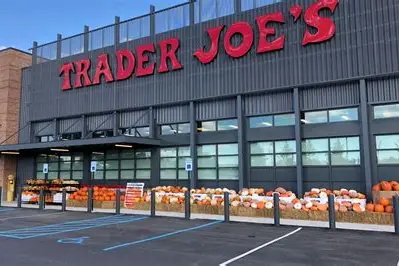
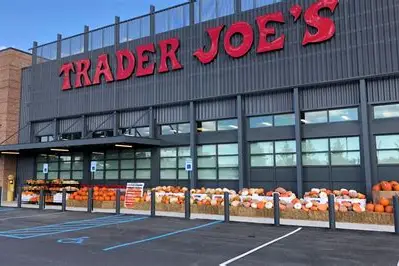
As shown in the table, Trader Joe’s is roughly 3 times more efficient than a normal grocery store. They do this by keeping the stores small (usually 10,000 to 15,000 square feet) and only stocking things people love. When you see a bag of Chili & Lime chips taking up space on their shelf, you know it’s making them a lot of money every single day.
Store Expansion
As of 2025, Trader Joe’s has over 630 stores across the United States. They have plans to add at least 21 more locations in 13 states. This expansion is a sign of a very healthy business. If the chips weren’t selling and the profits weren’t high, they wouldn’t be able to afford the expensive real estate in cities like New York, Los Angeles, and Boston.
The Career Perspective: Why the “Fearless Flyer” Matters
If you are looking at Trader Joe’s from a career standpoint, it is a fascinating place to work. They invest heavily in their “Crew Members” (employees). In the retail world, most stores pay the lowest amount possible. Trader Joe’s pays above-market rates because they know that happy employees make for happy customers.
Their marketing department doesn’t buy TV ads or billboards. Instead, they write the “Fearless Flyer” a quirky newsletter that tells stories about their products. This shows a career shift in marketing: moving away from “shouting” at customers and moving toward “connecting” with them through storytelling.
The “Dupe” Economy: Why Consumers are Switching
The rise of the “Takis Dupe” is part of a larger trend where regular people are realizing that store brands are often better and cheaper than big names. This is called the “Private Label Advantage”.
Psychological Factors
When a person buys the Trader Joe’s version, they feel “smart.” They are getting a product that tastes like the famous one but has “better” ingredients (no Red 40) and costs less. This creates “Brand Loyalty,” which is the most valuable thing a company can own. It’s the reason why, when the chips were briefly discontinued a few years ago, customers were devastated until they came back.
The Future of the Spicy Snack
Looking ahead to 2026 and 2027, the success of these chips has forced other companies to change. We are seeing more “clean-label” snacks hitting the shelves at places like Sprouts and even Costco. Trader Joe’s has also expanded the “Rolled Chip” family to include a Ranch flavor, proving that the “Rolled” format is here to stay.
Conclusion: The Verdict on Health and Wealth
So, are Trader Joe’s Takis healthy? If you are comparing them to a head of broccoli, the answer is no. They are still a fried snack with salt and carbs that can cause weight gain if you eat too many. However, if you are a regular person looking for a “better” version of a spicy chip, the answer is a resounding yes. They remove the chemicals, lower the salt, and use better oils.
From a wealth perspective, the Chili & Lime Rolled Corn Tortilla Chips are a tiny part of a massive, perfectly-oiled machine. Trader Joe’s uses its private-label strategy to capture more profit, its real estate strategy to dominate the competition, and its employee-first culture to build a “moat” that Amazon and Walmart find hard to cross. Whether you are eating the chips or analyzing the company, one thing is clear: being a “dupe” is a billion-dollar business.
Sources & References
- Trader Joe’s Official Product Page: https://www.traderjoes.com/home/products/pdp/chili-lime-flavored-rolled-corn-tortilla-chips-061420
- Healthline – Are Takis Bad for You?: https://www.healthline.com/nutrition/are-takis-bad-for-you
- Tasting Table – Trader Joe’s Takis vs. Regular: https://www.tastingtable.com/1866032/trader-joes-takis-vs-regular-which-better/
- Chart Guys – Trader Joe’s Stock and Investment Paradox: https://www.chartguys.com/articles/trader-joes-stock
- Delish – Healthy Trader Joe’s Snacks: https://www.delish.com/food/a70107913/healthy-trader-joes-snacks/
- Worldly Partners – Trader Joe’s Private Valuation Report: https://worldlypartners.com/wp-content/uploads/2025/10/Trader-Joes.pdf
- Mashed – Trader Joe’s Award Winning Chips: https://www.mashed.com/2105291/trader-joes-award-winning-chips-chili-lime-corn-chips/
- Wikipedia – Trader Joe’s History and Ownership: https://en.wikipedia.org/wiki/Trader_Joe%27s
- Wikipedia – Aldi Company and Foundations: https://en.wikipedia.org/wiki/Aldi
- The Motley Fool – How to Invest in Trader Joe’s: https://www.fool.com/investing/how-to-invest/stocks/how-to-invest-in-trader-joes-stock/
- Club Trader Joe’s Review: https://www.clubtraderjoes.com/trader-honest-review-of-joes-rolled-corn-tortilla-chips-aka-takis/
- TikTok Shop – Trader Joe’s Product Links: https://shop.tiktok.com/us/pdp/trader-joes-chili-lime-tortilla-chips-gluten-free-9oz/1731875960657252566
- Open Food Facts – Trader Joe’s Rolled Chips Nutrition: https://world.openfoodfacts.org/product/00614207/rolled-corn-tortilla-chips-chili-lime-flavored-trader-joe-s
- Thomasnet – Trader Joe’s Supply Chain Analysis: https://www.thomasnet.com/insights/trader-joes-supply-chain/
- Medium – Trader Joe’s Retail Strategy and Private Label Focus: https://medium.com/@pavlpolo/the-trader-joes-retail-strategy-business-model-how-strategic-private-label-focus-creates-retail-dc39f6f9dff3


 Gift Adah